The Wisdom of Nature: Artists & Scientists on The Beauty & Fragility of Our Planet

The Wisdom of Nature: Artists & Scientists on The Beauty & Fragility of Our Planet

Artists & Scientists on The Beauty & Fragility of Our Planet

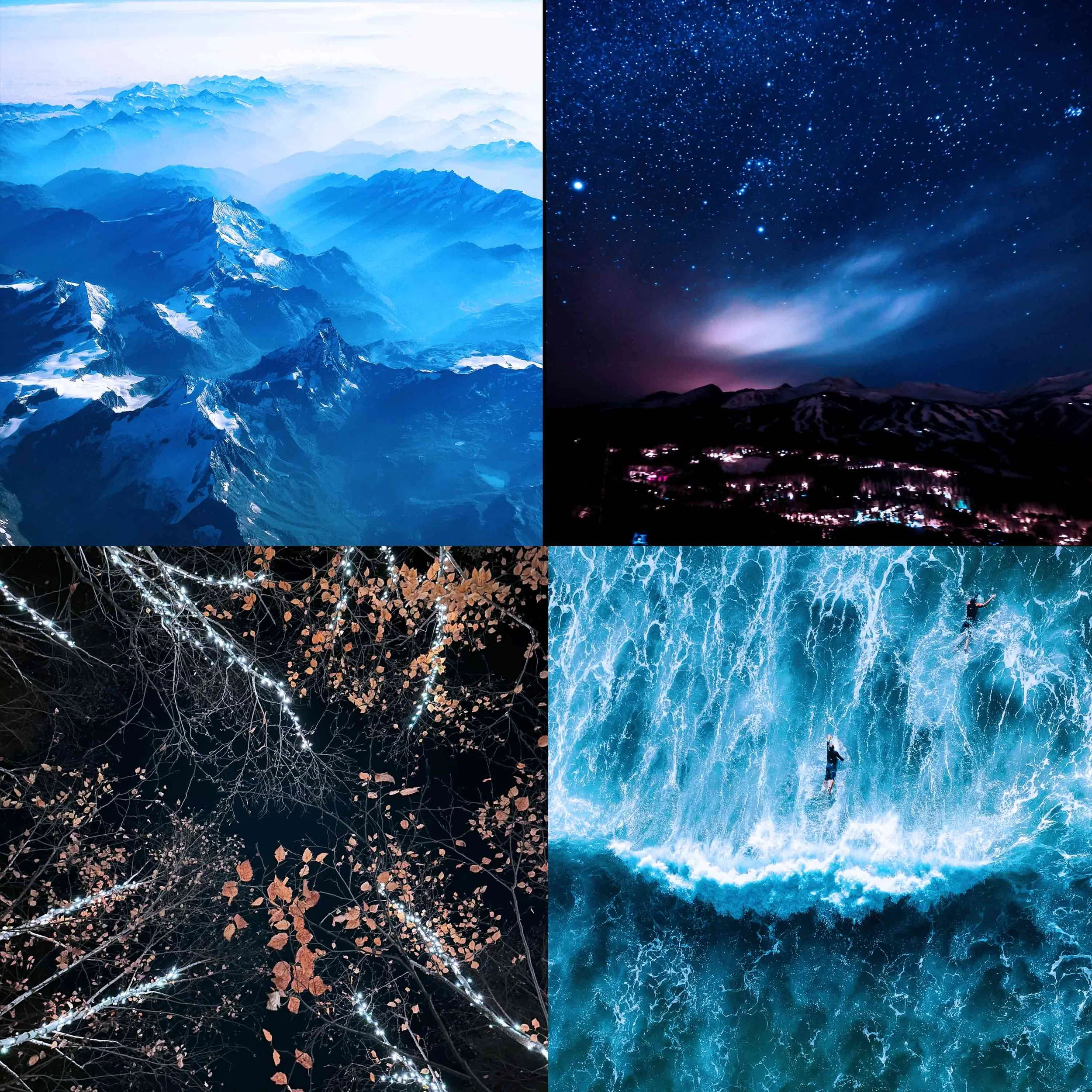
The Earth is talking. Are we listening? In this special edition, we hear from our guests from across the arts and sciences. From composers and poets to forest ecologists and climate envoys, they tell the story of our planet. Moving beyond the data of destruction, we explore the intelligence of nature, the ethics of what we eat, and the empathy required to save our future.
The Musician Who Sings to Animals - PLUMES on Trust & Cross-Species Communication - Highlights

The Musician Who Sings to Animals - PLUMES on Trust & Cross-Species Communication - Highlights

Musician & Activist PLUMES

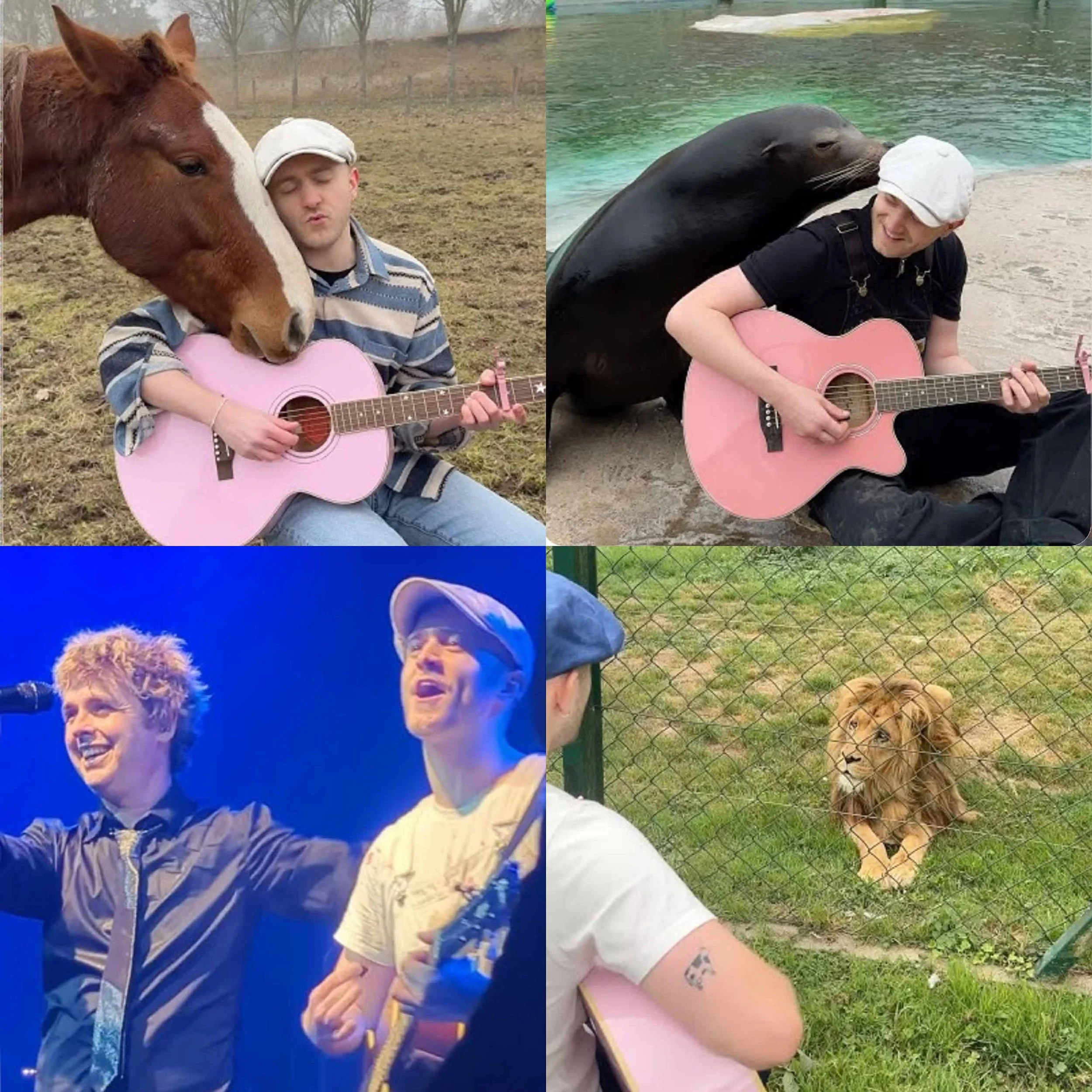
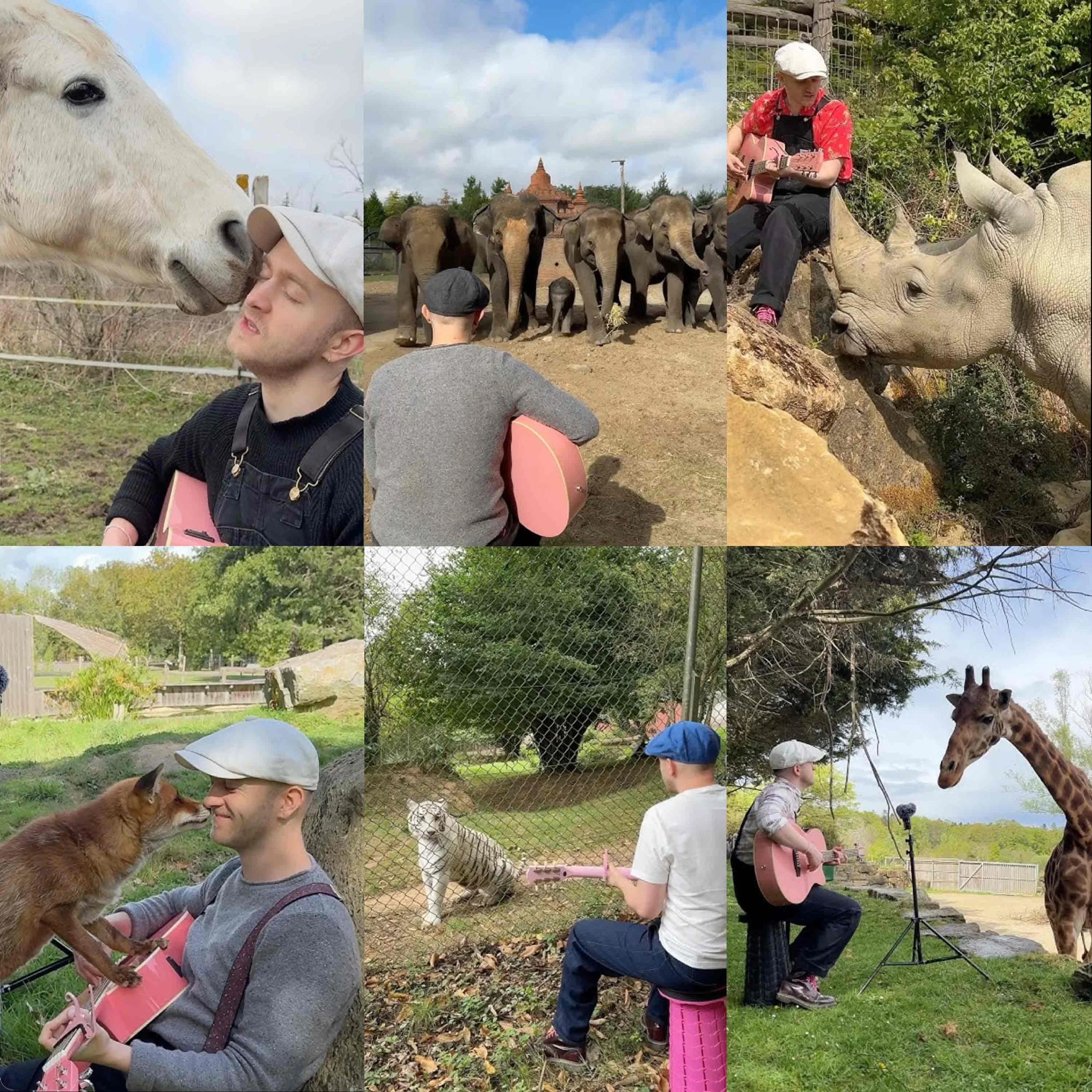
Mostly I’ll play in a minor key, something sad, which I think can work for an animal because they can sense the sadness, and they try to reassure me and comfort me. I chose love songs because I'm convinced they are very intuitive and they can sense what I am trying to say to them, and profess my love in a way. I think there's always a way to connect, and if you're being cautious and don't threaten the animals, something beautiful can happen.

The Musician Who Sings to Animals - PLUMES on Trust & Cross-Species Communication - Highlights

The Musician Who Sings to Animals - PLUMES on Trust & Cross-Species Communication - Highlights

Musician & Activist PLUMES

Mostly I’ll play in a minor key, something sad, which I think can work for an animal because they can sense the sadness, and they try to reassure me and comfort me. I chose love songs because I'm convinced they are very intuitive and they can sense what I am trying to say to them, and profess my love in a way. I think there's always a way to connect, and if you're being cautious and don't threaten the animals, something beautiful can happen.

Animals & The Healing Power of Music

Animals & The Healing Power of Music

Musician & Activist PLUMES

Mostly I’ll play in a minor key, something sad, which I think can work for an animal because they can sense the sadness, and they try to reassure me and comfort me. I chose love songs because I'm convinced they are very intuitive and they can sense what I am trying to say to them, and profess my love in a way. I think there's always a way to connect, and if you're being cautious and don't threaten the animals, something beautiful can happen.

Art, Empathy & Resilience with CADY McCLAIN, Actor, Director, Writer, Artist, Musician - Highlights

Art, Empathy & Resilience with CADY McCLAIN, Actor, Director, Writer, Artist, Musician - Highlights

A Conversation with Emmy Award-winning Actor, Director, Writer CADY McCLAIN

I won my first Emmy when I was 21, which was the result of absolutely devoting myself day and night for two years to doing all the scene work. I attended classes simultaneously and did plays until my mother died. I studied with Michael Howard for eight years. Even when I was so tired I couldn't get up to do a scene, he would say, "Get up and do a poem." It helped me enormously; it saved me. The way I was trained and how I train others is that you know when you’re in the zone. Oh God, it feels so good. It feels like flying. And that's what you want. You want to be so unselfaware that you're on liftoff?

A Life in Acting with Emmy Award-winning Actor, Director, Musician, Writer CADY McCLAIN

A Life in Acting with Emmy Award-winning Actor, Director, Musician, Writer CADY McCLAIN

A Conversation with Emmy Award-winning Actor, Director, Writer CADY McCLAIN

I won my first Emmy when I was 21, which was the result of absolutely devoting myself day and night for two years to doing all the scene work. I attended classes simultaneously and did plays until my mother died. I studied with Michael Howard for eight years. Even when I was so tired I couldn't get up to do a scene, he would say, "Get up and do a poem." It helped me enormously; it saved me. The way I was trained and how I train others is that you know when you’re in the zone. Oh God, it feels so good. It feels like flying. And that's what you want. You want to be so unselfaware that you're on liftoff?

The Theory of Water with LEANNE BETASAMOSAKE SIMPSON

The Theory of Water with LEANNE BETASAMOSAKE SIMPSON

World-Making, Life-Giving & Indigenous Internationalism with LEANNE BETASAMOSAKE SIMPSON

So I think that part of colonialism for Indigenous peoples has been this idea that Indigenous peoples aren't thinking peoples and that we don't have thought on a kind of systemic level. One of the things that I was interested in doing is intervening in that because I think Indigenous people have a lot of beautiful, very intellectual, theoretical contributions to make to the world. A lot of our theory is encoded in story, but a lot of our theory is also encoded in land-based practice. You can't learn about it from reading books or from going to lectures. You have to really be out on the land with elders for long periods of time. 

An Actor Prepares - SHARON LAWRENCE on Musical Theatre, Dance & Performing with the Whole Body to Create Complex Characters

An Actor Prepares - SHARON LAWRENCE on Musical Theatre, Dance & Performing with the Whole Body to Create Complex Characters

A Conversation with SHARON LAWRENCE

That transformation was key to my next step as an artist, to knowing that's what acting is. It isn't just posing; it isn't just being a version of yourself in a way that was free. Performing wasn't just performing; it was transforming. I think that artists find that in many different ways, and as actors, there are many ways into that.

SHARON LAWRENCE on Acting, Activism & The Art of Transformation

SHARON LAWRENCE on Acting, Activism & The Art of Transformation

A Conversation with SHARON LAWRENCE

That transformation was key to my next step as an artist, to knowing that's what acting is. It isn't just posing; it isn't just being a version of yourself in a way that was free. Performing wasn't just performing; it was transforming. I think that artists find that in many different ways, and as actors, there are many ways into that.

Childhood, Creativity & the Stories that Define Who We Are with MEGAN ABBOTT - Highlights

Childhood, Creativity & the Stories that Define Who We Are with MEGAN ABBOTT - Highlights

A Conversation with MEGAN ABBOTT
Author of Beware the Woman · You Will Know Me · Give Me Your Hand · The Turnout · Co-creator of Netflix’s Dare Me

I always say to young writers, you need to put your heart on the page. Don't worry about being like anyone else. I would say that foremost, in any of the arts, it is self-expression at its core… I think that it all goes back to childhood. I’ve always really been writing about family. I suppose we always are. I do think that it is the original wound, and it's where we are kind of wired and built from those early years. So I think every other relationship just replicates that. It's very natural for me to go there, I suppose because the feelings are most intense there. We just keep recycling these relationships and dynamics over and over again—until maybe someday we can catch ourselves and try to break the bad patterns. It feels the most visceral and real to me, always. You're always looking for that in writing. You want everything to be at this peak intensity, or at least I do. That seems the most natural place to start.

Exploring  Family Dynamics & Fierce Female Friendships with Novelist MEGAN ABBOTT

Exploring  Family Dynamics & Fierce Female Friendships with Novelist MEGAN ABBOTT

Author of Beware the Woman · You Will Know Me · Give Me Your Hand · The Turnout · Co-creator of Netflix’s Dare Me

I always say to young writers, you need to put your heart on the page. Don't worry about being like anyone else. I would say that foremost, in any of the arts, it is self-expression at its core… I think that it all goes back to childhood. I’ve always really been writing about family. I suppose we always are. I do think that it is the original wound, and it's where we are kind of wired and built from those early years. So I think every other relationship just replicates that. It's very natural for me to go there, I suppose because the feelings are most intense there. We just keep recycling these relationships and dynamics over and over again—until maybe someday we can catch ourselves and try to break the bad patterns. It feels the most visceral and real to me, always. You're always looking for that in writing. You want everything to be at this peak intensity, or at least I do. That seems the most natural place to start.

"We're connected to the lives of every creature on the planet" EIREN CAFFALL - Highlights

"We're connected to the lives of every creature on the planet" EIREN CAFFALL - Highlights

We are in a complex and delicately balanced relationship of connection to everything else on the planet. We begin to recognize, write into, and speak into the complex interdependence and interconnection of every gesture that we make on the planet. Most storytelling that I really respond to, whether it's from my own culture or from previous civilizations, acknowledges that we are in this complex relationship where every gesture we make is connected to the lives of every other creature on the planet. The more narratives we allow to be complex in that way and interconnected, the more we begin to change our brain chemistry around how we protect ourselves and everything that is in relation to us. The more that you have that evolving relationship with it, that's dynamic and alive to the moment you're in, and that's not afraid of the feelings of fear, hopelessness, grief, or pain that attend paying close attention to the world as it is evolving around you, the better we are able to be flexible in the relationship we need to form with fixing what we can and holding onto what we have.

All the Water in the World with Writer & Musician EIREN CAFFALL

All the Water in the World with Writer & Musician EIREN CAFFALL

A Conversation with Writer & Musician EIREN CAFFALL

We are in a complex and delicately balanced relationship of connection to everything else on the planet. We begin to recognize, write into, and speak into the complex interdependence and interconnection of every gesture that we make on the planet. Most storytelling that I really respond to, whether it's from my own culture or from previous civilizations, acknowledges that we are in this complex relationship where every gesture we make is connected to the lives of every other creature on the planet. The more narratives we allow to be complex in that way and interconnected, the more we begin to change our brain chemistry around how we protect ourselves and everything that is in relation to us. The more that you have that evolving relationship with it, that's dynamic and alive to the moment you're in, and that's not afraid of the feelings of fear, hopelessness, grief, or pain that attend paying close attention to the world as it is evolving around you, the better we are able to be flexible in the relationship we need to form with fixing what we can and holding onto what we have.

The Healing Power of Music, Community & Belonging with ROBERT & VICTORIA PATERSON

The Healing Power of Music, Community & Belonging with ROBERT & VICTORIA PATERSON

Community & Belonging with ROBERT & VICTORIA PATERSON

In an age of seeming isolationism, where some countries tend to isolate, this is such a great way to bring people together. When you're doing music and the arts, all those barriers just fall away. People are just collaborating and having fun. It’s such a bridge-building endeavor. I don't mean that to sound cheesy either, because I just think it is really amazing. They end up being ambassadors who go back to their own country and say, “Wow, I had a great time at this festival in America or in the Netherlands.” It ends up being one more step in our way, with our organization, of trying to connect people together in an age when so many people seem to want to hide out and not connect. We’re big advocates of connecting, and that’s another great reason why I think we love to do this. too.

Family, Addiction & Overcoming Trauma - Author & Musician LIZ MOORE on Long Bright River starring AMANDA SEYFRIED

Family, Addiction & Overcoming Trauma - Author & Musician LIZ MOORE on Long Bright River starring AMANDA SEYFRIED

I've lived in Philadelphia for about 16 years.  The book itself was inspired by my time spent in the Kensington neighborhood of Philadelphia interviewing a lot of the people that I met there, both longtime residents of the neighborhood and also people who were transient,  a lot of people struggling with addiction and a lot of women doing sex work to fund their  physical addiction to opioids. You find out about their past,  their road into addiction, their aspirations, their fears.  I began to lead free writing workshops at an organization named St. Francis Inn, which is a longstanding food service organization in the community. They had a women's day shelter where I taught.  I was really able to connect with people within the community on a quite personal level and loved my experiences in Kensington. And I still go, I'm still quite close with a number of the community workers, people who run free healthcare clinics. All of it ultimately informed the writing of Long Bright River.

OUR PLANET, OUR FUTURE - Environmentalists, Artists, Scientists & Earth Defenders Share their Stories

OUR PLANET, OUR FUTURE - Environmentalists, Artists, Scientists & Earth Defenders Share their Stories

Environmentalists, Artists, Scientists & Earth Defenders Share their Stories

We are privileged to present the voices of individuals dedicated to effecting change and mitigating the harm inflicted upon our precious planet. These are individuals deeply committed to the core values that drive positive transformation: Max Richter, Ingrid Newkirk, Julian Lennon, Bertrand Piccard, Carl Safina, Nan Hauser, Claire Potter, Ada Limón, David Farrier, Cynthia Daniels, Oded Galor, Kathleen Rogers, Joelle Gergis, Sir Geoff Mulgan, Alain Robert, Noah Wilson-Rich, Chris Funk, Suzanne Simard, Peter Singer, and Jennifer Morgan.

Performance, Politics, Art & Society w/ Sociologist RICHARD SENNETT - Highlights

Performance, Politics, Art & Society w/ Sociologist RICHARD SENNETT - Highlights

RICHARD SENNETT Centennial Professor of Sociology · London School of Economics · Fmr. Humanities Professor · NYU
Author of The Performer · The Fall of Public Man · The Culture of the New Capitalism · The Craftsman

We look at creative work as though the very creative process itself is something good. These are tools of expression, and like any tool, you can use them to damage something or to make something. They can be turned to very malign purposes, for instance, in the operas of Wagner. So I wanted to do this set of books, I want to show what is kind of the basic DNA that people use for good or for ill. What are the tools they use, if you like, of expression that they use in the creative process?

The Performer: Art, Life, Politics with RICHARD SENNETT, Sociologist & Author

The Performer: Art, Life, Politics with RICHARD SENNETT, Sociologist & Author

RICHARD SENNETT Centennial Professor of Sociology · London School of Economics · Fmr. Humanities Professor · NYU
Author of The Performer · The Fall of Public Man · The Culture of the New Capitalism · The Craftsman

We look at creative work as though the very creative process itself is something good. These are tools of expression, and like any tool, you can use them to damage something or to make something. They can be turned to very malign purposes, for instance, in the operas of Wagner. So I wanted to do this set of books, I want to show what is kind of the basic DNA that people use for good or for ill. What are the tools they use, if you like, of expression that they use in the creative process?