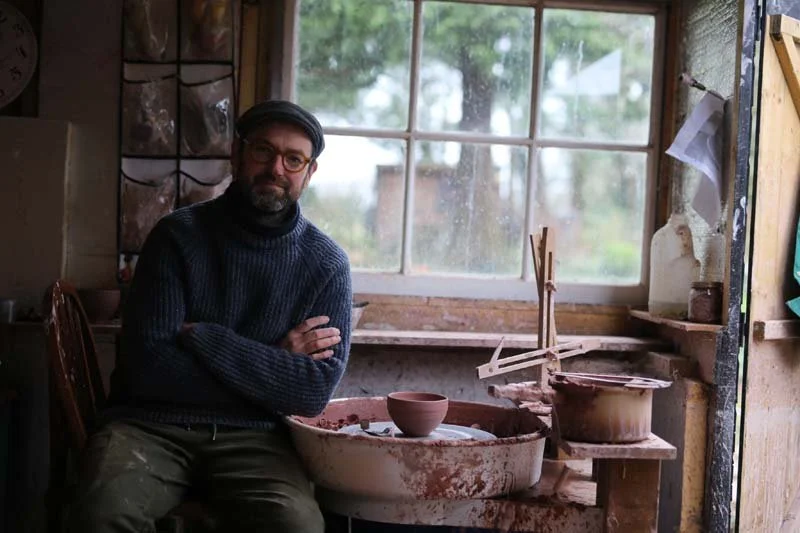


Steve Brown. After 25 years as a film and VFX animator, he discovered pottery in 2018 and was instantly hooked. Since then, he’s dedicated himself to the craft, reaching the final of this year’s Great Pottery Throw Down. He now supplies Michelin-starred restaurants, exhibits his work, and teaches, and feels like he’s only just getting started. @steve_brown_ceramics
Can you describe how your early life in the UK has been a source of inspiration? I was born in North Wales, and I think it was the landscape that first inspired me to explore, often on my bike, riding up into the mountains. That sense of adventure naturally led me to photography. By the age of 18, I had built my own darkroom and was developing my own prints. I’ve always been drawn to visual storytelling. As a child, I sketched constantly, often inspired by the characters in The Beano and The Dandy, comics I still own today. Creativity came far more naturally to me than academics. Drawing, painting, and photography weren’t just hobbies; they were all I ever really wanted to do.
When did you first fall in love with art and realize you wanted to be an artist? For you, what is the importance of the arts? What drew me to art was its ability to move people and stir deep emotion. From a young age, I was fascinated by all forms of art. I remember watching my uncle draw a character with such ease. He was a natural artist, and from that moment, all I wanted was to be able to draw like him. Art has always felt essential to me. For many people, it is a release of energy, something they simply need to express. I feel the same. My mind is always full of ideas I want to explore. Seeing what other artists create drives me to grow. It challenges me to push into new areas, to experiment more, and to keep searching for my own voice and style. It is not about imitation. It is about being inspired to go further in my own direction.
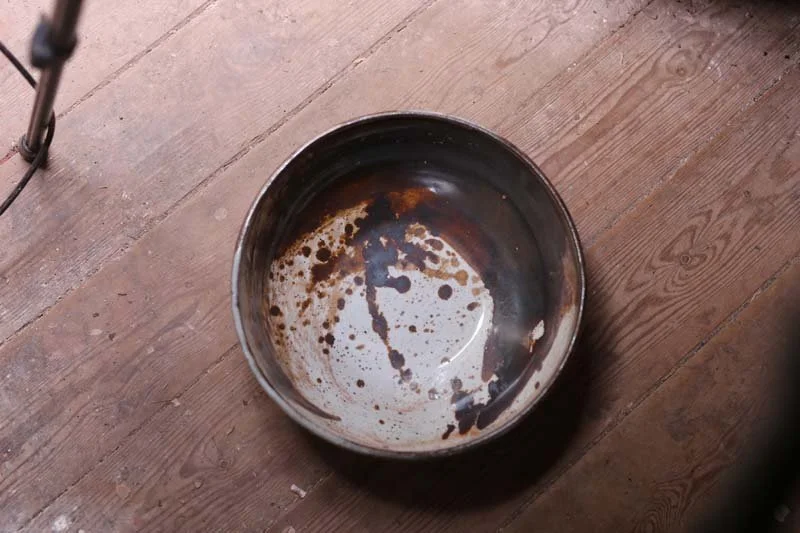
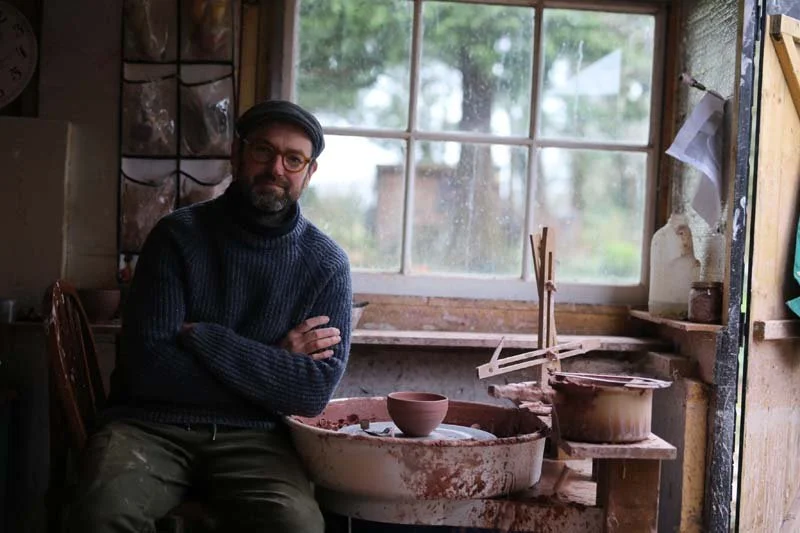
What does your typical day in the studio look like? Walk us through your studio and your most used materials and tools. I usually wake up early and take the dogs for a walk around the local orchards while I plan out my day. Most days, I already have a rough idea of what I want to throw, whether it is a commission for a restaurant or work for a gallery. I spend the morning at the wheel, throwing until lunchtime, then take an hour to have lunch with my partner.
In the afternoon, I either spend time in the garden, depending on the season, or I trim pots and add handles to pieces from a previous throwing session. I also spend about an hour on social media, catching up on what other makers are doing and sharing a post or video of my own work.
Evenings are usually spent cooking, which I really enjoy, and then relaxing with a film. My partner often helps with planning since she is the more organised one. I aim to spend three or four days a week focused on pottery. The rest of the time is spent gardening or getting out into the countryside around us.
What projects are you at work on at the moment? And what themes or ideas are currently driving your work? I am currently working on a commission for a London-based restaurant. They are looking for a series of plates that feel loose and rustic, but still refined in form and detail. Now that it is September, I am also starting to build up stock for several Christmas markets.
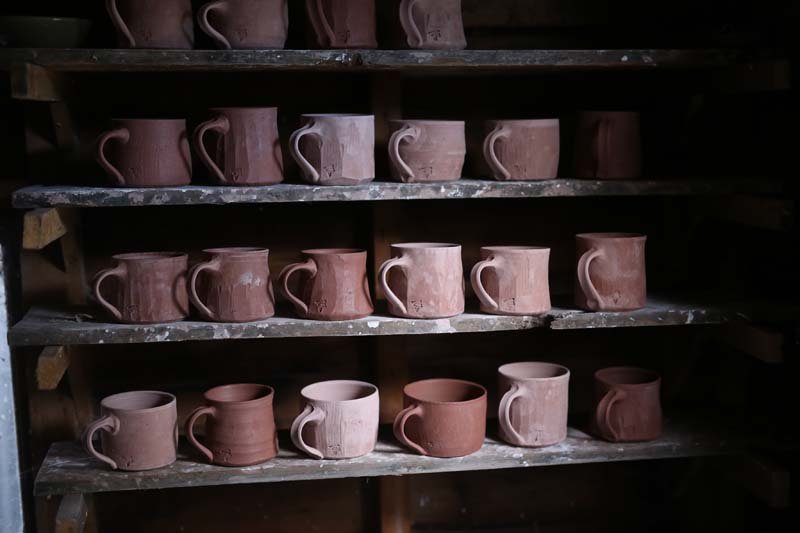
I will be making small flat white cups, large cappuccino cups, mugs, teapots, and oil burners. I am also developing a new piece of my own, which I am still working on and refining.
This week, I hope to finish building my new studio, which I have been working on over the past month. It has been exhausting, so I am really looking forward to getting back on the wheel in a brand new, pristine space. Let’s see how long it stays clean.
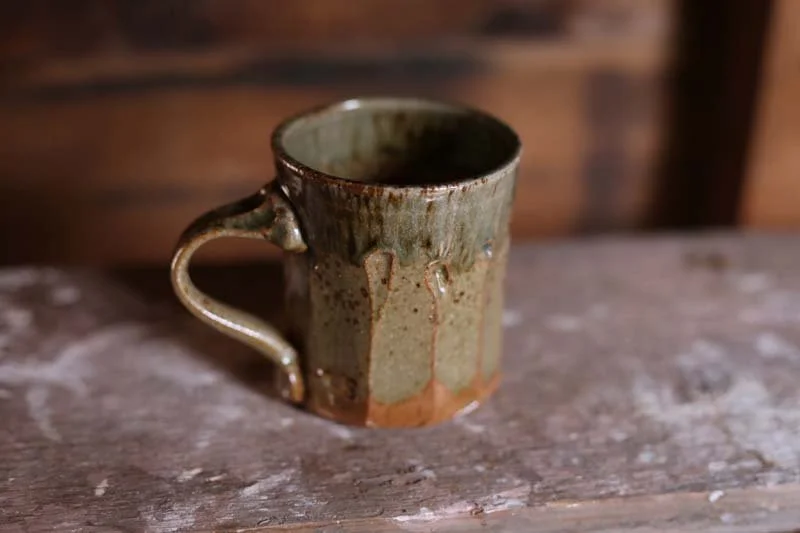
What do you hope people feel when they experience your art? What are you trying to express? I just want people to connect with my work in their own way. This is why I love making cups and mugs. They feel personal. It is not only about the beauty of the piece, but also the experience of using it. That is what I find so special about ceramics. It is functional art, and people take real pleasure in it. I especially love receiving feedback from customers who have enjoyed something as simple as drinking tea from a vessel I made. Knowing that my work has added a small moment of joy to someone's day makes all the ups and downs of working with clay completely worth it.
Which artists, past or present, would you like to meet? And why? This is a tough one. There are so many artists I would be quite happy to spend a day chatting with. I recently saw the Jenny Saville exhibition at the National Portrait Gallery in London, and I didn’t want to leave. I was completely blown away, and it made me want to head straight back to the studio and start sculpting. I would love the chance to talk with her, and I am also curious to see what she could create using clay and glaze.
I also really admire the work of Jean-Nicolas Gérard. He is a passionate vegetable grower as well, so I imagine we could spend the whole day talking about clay and gardens over a bottle of wine.
Other artists? Akiko Hirai, Takashi Nakazato, and Lisa Hammond are among the greats. I could easily keep going.
Do you draw inspiration from music, art, or other disciplines? I am definitely inspired by the arts in general. We visit London often, as we both lived there for many years. When we go, we usually see a play at the Almeida, visit a gallery, and catch live music at one of my favourite venues, the Union Chapel. I also like to check what is on at the Contemporary Ceramics Centre and the V&A.
I do not think I will ever look to ceramics alone for inspiration. There is so much more out there that influences my work. I get just as much from listening to a great album as I do from looking at a beautiful Japanese pot.
A great thing about living in the UK is… I feel lucky to divide my time between the rural countryside of Herefordshire and the energy of London throughout the year. I spend about ninety percent of my time in the countryside, where I allow myself to be fully absorbed by both the stillness and the sounds of nature. I love the isolation, as it gives me space to focus on my work and connect with the garden by growing vegetables and observing the changing seasons. That is one of the things I love most about living in the UK: the seasons are so distinct, and the older I get, the more I appreciate them.
We visit London every month or two for a few days and immerse ourselves in the culture the city has to offer. I still love the energy of London. I enjoy simply walking around and watching its people. My perfect afternoon is often spent in a pub with my sketchbook, something I have done for many years. Five days in the city is just right before returning to the peace and rhythm of nature.
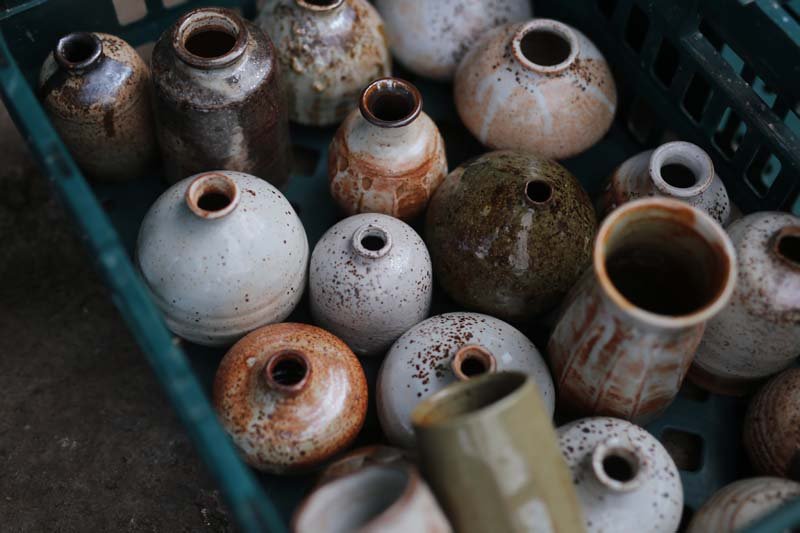
Can you describe a project that challenged you creatively or emotionally—and how you worked through it? The most challenging project I have worked on was for the two-star Michelin restaurant Humble Chicken in Soho, London. The head chef and owner, Angelo Sato, wanted an entirely new series of pieces. These went far beyond the usual plates and bowls and included much more complex forms such as lidded donburi, slab-built boxes designed to look as if they had been carved from stone, and sake carafes that each needed to have their own personality in both shape and glaze, while all holding exactly 290 millilitres.
It was a demanding time. Spring had just arrived, and our 1.5-acre garden and vegetable patch suddenly came to life after a long winter, so I was juggling a lot of work outside as well. I had also just appeared on the television series The Great Pottery Throw Down, which brought a wave of attention on social media, along with several interviews for radio and magazines. It was an intense four months, and I think I have only just recovered from it.
Despite everything, I was incredibly proud of what I created, and I was relieved and satisfied to see it all come together in the end.
Tell us about important teachers/mentors/collaborators in your life. I've had many mentors over the years, starting right back in my art college days. More recently, a few experienced ceramicists and potters, like Nick Membery and Andy Priestman, have been incredibly generous with their time and knowledge. Both are masters of their craft, and I often turn to them whenever I’m struggling with glazing or throwing. They've each spent time guiding me through challenges, and I owe a great deal to their support.
Sustainability in the art world is an important issue. Can you share a memory or reflection about the beauty and wonder of the natural world? Does being in nature inspire your art or your process? Sustainability and the environment are deeply important to me. Working within the ceramics industry, which is not known for being environmentally friendly due to the mining and energy required, presents its challenges. Still, I do what I can as an artist to tread as lightly as possible, and I believe that small actions can make a difference. I'm especially fascinated by the connection to local raw materials and hope to begin collecting my own for glazes, rather than relying on materials that must be processed and transported. I'm surrounded by clay and stone, and that is all I need to create something meaningful.
AI is changing everything - the way we see the world, creativity, art, our ideas of beauty and the way we communicate with each other and our imaginations. What are your reflections about AI and technology? What is the importance of human art and handmade creative works over industrialized creative practices? AI is having a huge impact on the film industry, and in many ways, I feel I moved on at the right time. AI is now a part of our daily lives, and I believe we should see it as a tool to support our own creative processes. Relying on it to completely AI-generated work feels soulless to me, but when used thoughtfully, it can be incredibly helpful. I use AI to assist with glaze recipes and to solve more technical or scientific challenges, so for me, it's just another tool in the studio. It might be interesting to work more closely with it in the future, but no matter what, I’ll always rely on my own hands and the skills I’ve spent years developing. That human touch is what people connect with. not something generated by machine learning and algorithms.
Exploring ideas, art and the creative process connects me to what’s within and something I need to express and release. It’s the truest way I know how to communicate and express myself, and it’s a journey that’s always evolving, always moving forward. Being creative isn’t a choice for me, it’s something I simply have to do, and I’ll continue doing it for as long as I possibly can.